
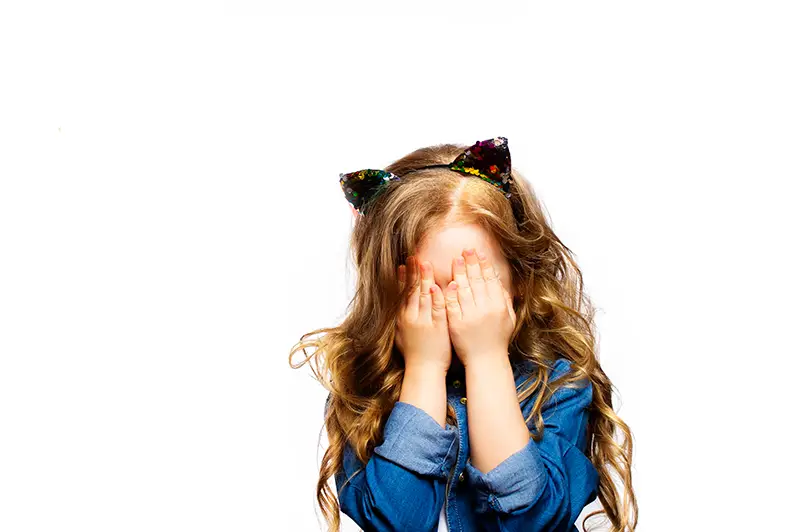
When Children’s Emotions Need to Move
Children are taught every day to sit still, be polite, and hold it together. Yet the very thing they are taught to hold is exactly what needs to move.
When a child pushes down sadness, fear, disappointment, or frustration, it does not vanish. It settles inside them like a slow-moving tide. Emotional suppression is not balance, and it is not maturity. For children, suppression quietly forms the belief that their feelings are too much, too inconvenient, or somehow unwelcome. Those unexpressed emotions wait. They build pressure. And they look for any opening.
That is why the smallest incident can spark a giant reaction. A spilled cup becomes a meltdown. A simple request becomes defiance. A quiet child withdraws even further. These moments are not random. They are emotional triggers born from feelings that never found a path out. When a child has repressed sadness, fear, or frustration for too long, their system becomes saturated. The smallest event can activate the entire backlog. What spills out is not about the present moment. It is the accumulated pressure of everything they were unable to express, finally breaking the surface in the only way the body knows how.
Emotion is living energy. Its only goal is to move.
Emotion rises inside the body with a purpose. It wants to be felt, acknowledged, and released. When a child is allowed to complete that cycle, the body softens, the mind clears, and the nervous system settles. This is how emotional energy transforms into understanding. If the cycle is interrupted, the emotion remains active, waiting for the next chance to surface.
Science has revealed that the biological experience of an emotion in your body lasts only about 90 seconds. Yet we all know emotions often feel like they last much longer. This happens because the sensation rises, but instead of letting it move through its natural cycle, the mind interrupts the process. We judge the feeling, resist it, tighten against it, or push it down.
Children do the same thing, but with far fewer tools.
When a child senses an emotion and immediately feels they must hide it, the 90-second cycle cannot be completed. The feeling becomes “trapped” inside their nervous system, looping, tightening, and waiting for another moment to try again. This is why unexpressed emotions build over time. The body keeps trying to finish what the mind keeps interrupting.
This is also why emotional expression is essential, not optional. Children don’t need to be shielded from their emotions. They need a way to move through, to safely experience them.
And this is where the Feel and Free process becomes powerful. It gives children a structure that aligns with how emotion actually works in the body.
The Feel and Free method gives children a path.
Children often do not know what to do with intense emotion. They feel the pressure inside but have no framework to help it move. The Feel and Free method becomes powerful.
Feel is the first step.
A child pauses long enough to notice the emotion inside. Not to judge it. Not to explain it. Simply to sense it.
Where is it in my body?
Is it tight, hot, heavy, fluttery?
This awareness alone begins to release the internal pressure.
Name is the second step.
When a child identifies the feeling as sadness, frustration, fear, or overwhelm, they create clarity inside their own system. Naming does not fix the emotion . . . it organizes it. It tells the body, I know what this is. I am not alone in it.
Allow is the third step.
This is where emotional freedom begins. Allowing teaches the child that the feeling can rise and fall without danger. They breathe. They soften. They stay present. In this moment, the emotion completes its natural movement. What felt overwhelming becomes manageable. What felt scary becomes simply a sensation passing through.
This is not theory. It is nervous system truth.
When a child feels an emotion fully, names it accurately, and allows it without resistance, the internal fight dissolves. The body relaxes. The mind steadies. The emotion releases instead of erupting later as a trigger.
But something even more important happens in that moment.
The child learns they are safe inside their own inner world.
Most emotional reactivity in children comes from fear: fear of the feeling, fear of being judged, fear of getting in trouble, fear of being misunderstood. When that fear softens, expression becomes natural instead of chaotic. The child no longer has to defend against their own emotion. They can be and move with it.
Allowing a child to complete the emotional cycle teaches them several lifelong truths.
My feelings are real. They do not control me.
This is the foundation of self-mastery. The child discovers that emotion is an experience, not an identity.
My body knows what to do with my feelings.
This restores trust in themselves. They begin to sense their internal compass instead of suppressing it.
Emotions end. They do not last forever.
This eliminates the panic children feel when a big emotion rises. When the wave has been allowed to pass, the child knows from experience that release always follows.
I can feel something uncomfortable and still stay connected.
This is emotional resilience. Not forced calm. Not emotional shutdown. Genuine inner steadiness.
When children learn these truths through experience, not pressure, they stop fearing their own emotions. They learn that their inner world is not a threat. It is a guide. With each completed emotional cycle, their nervous system becomes steadier. Their confidence grows. Their relationships deepen. They begin to trust both themselves and the adults who make emotional safety possible.
This is why emotional expression matters.
This is why suppression harms.
And this is why Feel and Free is more than a method.
It is a pathway to emotional wholeness.
Children do not become resilient by holding everything in.
They become resilient by learning how to let emotions move through them without losing themselves in the process.
Link to full blog post

Angela Legh, International Bestselling Author, Motivational Speaker, and Television Show Producer, passionately promotes emotional intelligence through her book series The Bella Santini Chronicles and her TV show Unfiltered Parenting