
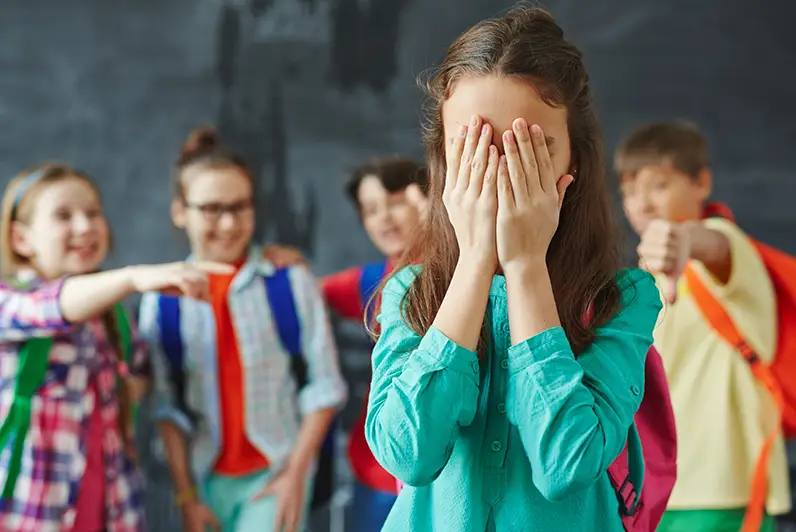
Nearly one in five students reports being bullied each year. Behind every statistic is a child being bullied, who feels unsafe, unseen, or unworthy. There is also another child acting out their own unhealed pain, the one who is bullying. We often view bullying as a problem of discipline or school culture, but at its heart, bullying is an emotional crisis.
What Bullying Really Is
Bullying is not simply kids being unkind. It is a repeated pattern of aggressive behavior that creates fear, shame, or exclusion. It involves three main elements: intentional harm, repetition, and a power imbalance. According to the National Institutes of Health, bullying happens when one child or group repeatedly targets another who cannot easily defend themselves.
While this definition helps us recognize the behavior, it does not reveal the deeper truth. Bullying is not just about power. It is about internal pain that has not yet been healed.
The Emotional Root of Bullying
At its core, bullying is not a sign of confidence or control. It is a reflection of inner pain and emotional imbalance. Children who bully often feel powerless in other areas of life, perhaps at home or in another group environment. When a child feels unseen, shamed, or controlled, their pain seeks expression. Bullying becomes a distorted attempt to transfer that pain onto someone else. When children have not learned how to express emotions in healthy ways, that energy can twist into cruelty or dominance.
In truth, both the bully and the victim are suffering. One expresses their pain through aggression, the other through silence. Recognizing this truth changes everything. Instead of labeling a child as “the problem,” look beneath the behavior and ask, What pain is this child carrying? When adults do this, they move from punishment to healing, from control to compassion.
How Bullying Appears
Bullying takes many forms, and each carries emotional consequences.
- Physical bullying involves acts such as hitting, tripping, or damaging belongings.
- Verbal bullying uses words to harm through insults, threats, or teasing.
- Relational bullying focuses on exclusion, spreading rumors, or manipulating friendships.
- Cyberbullying extends cruelty into the digital world through online harassment or sharing private information.
According to research from Walden University, these forms often overlap, creating layers of distress that can impact a child’s confidence and trust in others. Recognizing these behaviors early allows parents and educators to respond with awareness rather than reaction.
The Lasting Impact
Bullying affects more than a child’s self-esteem. It shapes how they see themselves and how safe they feel in relationships. In the short term, bullying can cause anxiety, disrupted sleep, and withdrawal from friends. Over time, it can grow into deeper struggles with depression, chronic anxiety, and difficulty trusting others.
These effects are not signs of weakness but symptoms of emotional injury. Healing begins when children are met with understanding, support, and tools to safely express their emotions . When compassion is present, emotional wounds can become the foundation for resilience.
Creating a Culture of Safety and Empathy
Ending bullying is not about punishing behavior. It begins by addressing the emotional roots. True prevention grows from respect, understanding, and emotional safety.
Research from Humanium reminds us that effective prevention is not about control. It is about nurturing environments where kindness is modeled and empathy is taught. When adults listen without judgment and validate children’s feelings, they teach through presence rather than instruction.
Parents and educators can create meaningful change by:
- Keeping communication open and judgment-free.
- Teaching emotional intelligence through daily reflection and conversation.
- Modeling respectful conflict resolution.
- Offering steady support to both the bullied child and the one acting out.
- Encouraging empathy, inclusion, and courage to stand for kindness.
Rules alone can be broken, but compassion transforms from within. Real change happens when children learn to understand their emotions and the emotions of others.
The Path Forward
Bullying will not end through control. It will end through connection. Every act of cruelty is a reflection of emotional pain asking to be seen. As parents, teachers, and mentors, we have the power to guide children toward healing by helping them feel safe enough to express what hurts.
When we teach children that every feeling has a purpose and that empathy creates strength, we raise a generation that no longer needs to hurt others to feel whole.
Healing begins within the heart. And from that place, the cycle of bullying can finally come to an end.

Angela Legh, International Bestselling Author, Motivational Speaker, and Television Show Producer, passionately promotes emotional intelligence through her book series The Bella Santini Chronicles and her TV show Unfiltered Parenting