
Why Emotional Safety Is the True Foundation of Learning
Imagine a student sitting in class, eyes downcast, pencil frozen. The lesson is clear, the instructions repeated, but his or her mind isn’t absorbing a word. This isn’t defiance, it could be defensive. Something inside feels unsafe.
In classrooms across the country, educators are realizing that the missing link in academic success is not technology, testing, or new teaching methods. It’s emotional safety. As someone deeply passionate about helping children develop emotional resilience, I’ve seen how much potential is unlocked when students feel safe enough to be fully themselves.
Los Angeles, with its vibrant mix of innovation, compassion, and creative spirit, is the perfect place to lead this conversation. Here, educators and parents alike are redefining what it means to truly support a child, not by teaching them to control their emotions, but by helping them experience those emotions safely and honestly.
What Does Emotional Safety Really Mean in a Classroom?
While many educators understand the value of emotional intelligence, few realize that emotional safety is the foundation upon which emotional intelligence is built. Without it, strategies like self-regulation or mindfulness can feel like surface fixes to much deeper issues.
Emotional safety is more than kindness or calm. It is the invisible trust between teacher and student that says, “You are safe to feel here.” It is an environment where curiosity is encouraged, mistakes are accepted, and emotional expression is welcomed rather than punished.
Research from the Harvard Center on the Developing Child emphasizes that stress and fear activate the brain’s survival mechanisms, limiting access to the prefrontal cortex, the very part of the brain responsible for reasoning and learning. When students feel emotionally secure, that neural energy shifts from self-protection to exploration and problem-solving.
In other words, emotional safety isn’t soft. It’s science.
Why Regulation Alone Isn’t Enough
Much of today’s classroom guidance focuses on self-regulation, helping students manage or control emotions. While regulation has its place, it often reinforces the idea that emotions are problems to fix rather than messages to understand.
The late psychotherapist Alice Miller, revealed through her research that emotional repression in childhood often becomes the root of much of the suffering and cruelty we see in the world. When children are taught to suppress their true feelings to appear “good” or “composed,” they learn to disconnect from themselves. Over time, that disconnection can manifest as anxiety, apathy, or even aggression.
The work I do builds on Miller’s insight. Emotional resilience is not about controlling emotions: it is about honoring and experiencing them safely. When we create environments where students are free to express their authentic feelings without judgment, they develop strength from within. This freedom is what allows genuine growth, creativity, and compassion to flourish.
True healing and true learning come from emotional resilience, the capacity to experience feelings fully without being consumed by them. Emotional resilience allows students and teachers to move through anger, sadness, or anxiety with understanding rather than resistance.
In my vision for the future, I see classrooms transforming when teachers shift from “managing emotions” to “making space for emotions.” Instead of trying to fix a child’s tears or redirect their frustration, teachers sit beside their students in compassion. This simple act of presence, of allowing emotions to be felt rather than controlled, has the power to turn chaos into calm.
For those ready to explore how to build that kind of safety step by step, I’ve shared a deeper dive here: Your Emotional Safety Guide
How Emotional Safety Drives Academic Success
Students who feel safe take intellectual risks. They raise their hands even when unsure. They share ideas freely. They persevere through mistakes. These behaviors, hallmarks of a growth mindset, flourish only in emotionally secure environments.
A 2023 Journal of Educational Psychology study found that students who perceived emotional safety in their classrooms demonstrated higher motivation, better attendance, and stronger cognitive engagement. Emotional security is not a “nice to have,” it is a measurable driver of performance.
For teachers and administrators, building an emotionally safe environment means more than adopting new programs. It is about embodying new principles:
- Model emotional transparency. When educators admit to frustration or uncertainty, it normalizes emotion as a natural part of the human experience.
- Listen without judging or labeling. Respond to emotion with curiosity instead of correction: “I see you’re upset. Want to tell me more?”
- Prioritize relationships over results. Academic success naturally follows when students trust the adults guiding them.
The Shift from Chaos to Calm
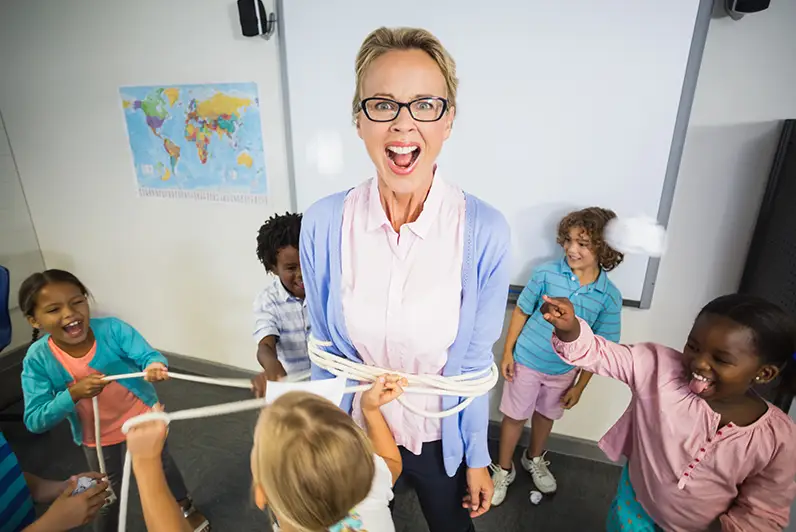
Emotional safety transforms the classroom dynamic. Instead of power struggles and reactivity, teachers become co-regulators, anchors of stability in a storm of young emotions. Students begin to mirror that calm, creating a cycle of trust and respect.
This transformation does not require elaborate systems or expensive curricula. It begins with presence, compassion, and the courage to hold space for emotion rather than control it.
When teachers embrace emotional resilience, the ability to feel fully without falling apart, they model it for their students. That is when classrooms shift from chaos to calm, from compliance to connection.
As Los Angeles educators continue to explore the connection between emotional well-being and academic achievement, the opportunity is clear: we can lead the nation in redefining what “education” means. Emotional safety is not an add-on; it’s the foundation for learning, connection, and human growth.
To explore how emotional safety transforms classrooms from chaos to calm, visit The Emotional Safety Guide. Together, we can help every child discover that learning begins where emotional safety lives.

Angela Legh, International Bestselling Author, Motivational Speaker, and Television Show Producer, passionately promotes emotional intelligence through her book series The Bella Santini Chronicles and her TV show Unfiltered Parenting