
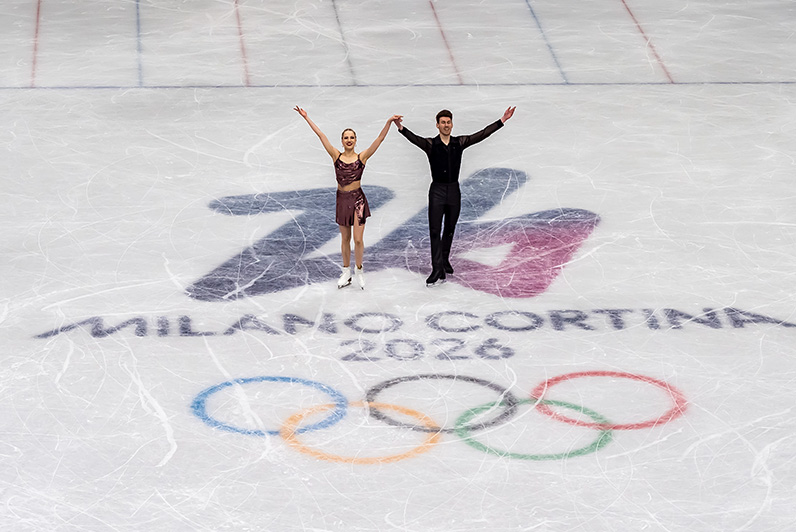
The curtain fell on Sunday, February 22, on the 2026 Winter Olympics, closing sixteen days of alpine brilliance, heartbreak, resilience, and human drama. From the ice arenas of Milan to the snow-covered slopes of Cortina d’Ampezzo, the Games delivered what they always do: medals for a few, lessons for many, and a global reminder that elite sport is as psychological as it is physical.
This year’s Winter Olympics were not defined solely by podium finishes. Comebacks, clutch moments, visible tears, and invisible mental strength shaped the narrative. Behind every gold medal run was a quiet interior battle, a mastery of nerves, expectation, and self-doubt.
To understand these Games is to understand the psychology of high performance.
The Ritual Before the Roar: Pre-Competition Mental Conditioning
Long before the starting gun fires or the music begins in a figure skating program, Olympic athletes are already competing internally. Pre competition rituals are not superstition. They are neurological preparation.
Walk into a warmup zone before a downhill final or a hockey championship game and you will see it: headphones on, eyes closed, breath controlled. Some athletes move through identical sequences every time. The same stretches. The same pacing. The same music. The same cue words.
Rituals reduce uncertainty. The Olympic stage amplifies everything: the crowd, the cameras, the stakes. A structured routine creates familiarity in an otherwise overwhelming environment. The brain, recognizing predictability, lowers its threat response. Heart rate stabilizes. Muscles respond more efficiently.
Mental conditioning is embedded in this process. Athletes rehearse scenarios weeks and months in advance. What if I stumble? What if I am trailing? What if I lead after the first run? By confronting potential stressors mentally, they blunt their emotional impact later.
When American figure skater Alysa Liu stepped onto Olympic ice and delivered a triumphant free skate to win gold, it was not just athleticism on display. It was the result of rehearsed composure and pressure practiced long before the spotlight.
Seeing It Before It Happens: Visualization and Performance Rehearsal
Visualization remains one of the most powerful psychological tools in elite sport.
Neuroscience shows that mentally rehearsing a movement activates many of the same neural pathways as physically executing it. Olympic athletes leverage this relentlessly. A ski racer envisions each gate. A speed skater feels edge pressure in the corners before stepping onto the ice. A hockey player imagines overtime scenarios long before they unfold.
When the United States women’s hockey team found themselves in a tight gold medal game against Canada late in regulation, they were not mentally improvising. They had rehearsed tie game pressure repeatedly. When the equalizer came and the match surged into overtime, the intensity was real but not unfamiliar. The eventual game winner was not merely clutch. It was cognitively prepared.
Visualization narrows the gap between imagination and execution. It builds cognitive confidence and reduces hesitation under stress.
Engine Versus Driver: Physical Preparation and Mental Control
Physical preparation builds capacity. Mental preparation builds control.
At the Olympic level, every athlete is physically elite. Strength, endurance, and technique are baseline requirements. Margins are microscopic. The body is honed to near perfection.
But when a skier stands at the start gate with millions watching, muscles are rarely the limiting factor. Emotion is.
Physical preparation improves lactate thresholds and power output. Mental preparation improves attentional control and emotional regulation. One builds the engine. The other trains the driver.
The distinction becomes visible under pressure. Two athletes may possess identical technical skills. One tightens. The other expands into the moment.
When It Breaks: Handling Failure on the World Stage
For every medalist, dozens leave empty handed. The Olympics magnify not just triumph, but disappointment.
In women’s figure skating, Kaori Sakamoto entered medal contention only to miss a crucial jump in her free skate. In a sport decided by fractions, that error proved costly. Cameras captured the raw aftermath: frustration, exhaustion, disbelief.
This is where psychological training becomes essential.
Elite athletes are taught to separate identity from outcome. I performed below standard is different from I am a failure. That distinction protects long term confidence.
Teams often employ a 24-48-hour rule. Allow emotion first. Analyze later. Immediate suppression can backfire, but prolonged rumination erodes resilience. Structured reflection transforms heartbreak into data.
Failure at the Olympics is not rare. It is statistically inevitable. The skill lies in metabolizing it.
The Invisible Teammates: Sports Psychologists and Mental Coaching
At these Games, sports psychologists were as integral as strength coaches. Modern Olympic delegations invest heavily in mental performance staff. Licensed psychologists help athletes manage anxiety, navigate public scrutiny, and process setbacks. Mental performance coaches refine routines, visualization techniques, and cue systems.
In snowboarding, where a single fall can derail an entire campaign, the ability to reset is critical. After a difficult qualifying run, Eileen Gu returned in the halfpipe final with composure, landing a gold winning performance under enormous expectation. That steadiness is not accidental. It is trained.
Mental coaches teach athletes to control the controllable, manage arousal levels, and anchor attention with simple cues such as smooth, attack, and trust. Under pressure, simplicity wins.
Psychology is no longer optional in elite sport. It is infrastructure.
The Three Second Turnaround: Resetting in Real Time
Mistakes are unavoidable. What defines elite competitors is how quickly they recover.
In alpine skiing, a slight miscalculation can cost tenths of a second and a podium. In hockey, a defensive lapse can shift momentum. In figure skating, a shaky landing can threaten composure.
Resetting happens in seconds. Athletes use micro breathing techniques, a sharp inhale followed by a longer controlled exhale, to calm the nervous system. They compartmentalize performance into segments: gate by gate, lap by lap, element by element.
They return to the next action.
During a dramatic curling comeback by Team GB, a precise final stone reversed the match’s trajectory. That kind of execution requires mental isolation from previous errors. The past end is irrelevant. Only the present stone exists.
The fastest resetters are not the least emotional. They are the most disciplined in directing emotion.
Beyond the Podium
When the Olympic flame was extinguished, what remained were not just medal counts but psychological case studies.
High performance is not the absence of fear. It is the regulation of it. It is preparation meeting pressure without collapse.
The 2026 Winter Olympics showcased extraordinary athleticism, but more importantly, they revealed the architecture beneath it: ritual, rehearsal, resilience, and recovery.
For every gold medal moment, there was unseen cognitive labor. Visualization sessions in quiet rooms. Breathwork backstage. Controlled self- talk at the start gate. Honest conversations after disappointment.
The world sees the final run. The world rarely sees the mind that steadied it.
As Milano Cortina closes its chapter in Olympic history, the most enduring lesson may not be who won, but how they endured.

To cover different events and add a variety of expertise to the news and stories we report, we have several staff writers who contribute to our publication.