
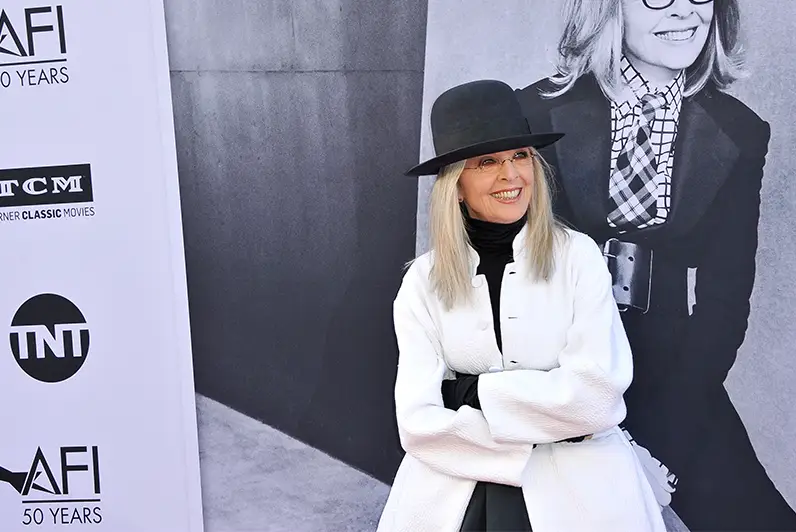
Diane Keaton passed away on October 11, 2025, leaving a hollow space in Hollywood and in the hearts of everyone who watched her not just as an actress, but as a guide through love, aging, motherhood, and self-discovery. She wasn’t a star who lived for the spotlight. She lived for the work. That devotion and full-bodied sincerity is what made her unforgettable.
Hollywood has lost a legend. But those of us who grew up with Diane Keaton lost something even closer, someone who showed us how to feel deeply, live on our own terms, and embrace life’s contradictions. She walked through the world like she was rewriting the rules of elegance, with pearls draped over quirky layers, a polka dot tucked somewhere unexpected, and a confidence that made imperfection feel irresistible.
She didn’t just play women on screen; she embodied them. Diane Keaton taught us that joy and grief could coexist, and that growing older could be both terrifying and beautiful.
When I was a kid watching Father of the Bride in the early nineties, Diane Keaton and Steve Martin seemed impossibly grown up. The picture of parental calm and middle-aged wisdom. They were in their forties then, but to me, they felt ancient, like the embodiment of adulthood itself. Watching it now, as someone closer to their age than I ever expected to be, I see something different. I see Diane Keaton’s trembling laugh as her daughter tells her she’s getting married, the way her eyes brim with pride and panic all at once. I see a woman trying to hold joy and loss in the same breath. That is what Diane Keaton did best. She didn’t perform emotion. She felt it. And in doing so, she gave the rest of us permission to feel too.
California Roots
Keaton’s story began in California. She was a 1963 graduate of Santa Ana High School, where she performed in singing and acting clubs and starred as Blanche DuBois in a school production of A Streetcar Named Desire. After graduation, she attended Santa Ana College, and later Orange Coast College as an acting student, before dropping out after a year to chase her dreams in Manhattan.
That leap from a Southern California classroom to the heart of New York’s theater world captures her spirit perfectly: brave, whimsical, and unafraid to start over. She carried that blend of California warmth and New York edge throughout her life, moving between worlds with a grounded confidence that made her both relatable and radiant.
Though she became a global icon, Diane Keaton always felt like California. There was something about her, the warmth, the quirk, the sunlit optimism wrapped around a hint of melancholy, that felt distinctly Western. She grew up in Southern California, but her blend of artistry, humor, and intellect would have fit right into San Francisco’s creative soul.
Here, in a city that celebrates individuality and imperfection, Keaton’s legacy feels especially at home. She was a reminder that creativity doesn’t have to shout to be powerful, that beauty doesn’t have to be polished to be meaningful. She embodied the courage to age honestly, to love deeply, and to live with curiosity until the very end.
The Art of Staying True
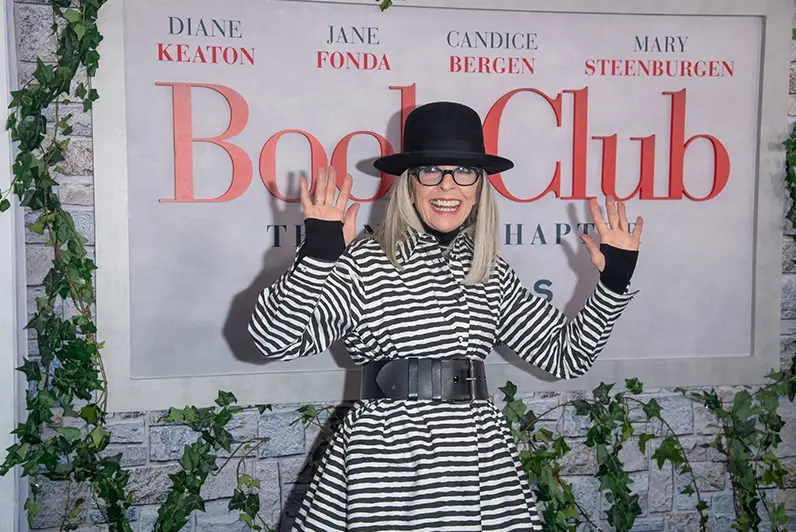
In a business built on reinvention, Diane Keaton never pretended to be anyone but herself. The hats, the suits, the fedoras, the turtlenecks, these weren’t costumes. They were declarations of identity. She mastered the balance between masculine and feminine clothing with elegance and ease, one moment in crisp tailoring, the next in pearls and polka dots. She made fashion an extension of her spirit: bold, expressive, and perfectly at peace with contradiction.
She was proof that confidence didn’t have to roar. It could whisper through a wide-brimmed hat or a high-collared coat, through laughter that spilled out freely and a voice that quivered at the edges of emotion.
Even as Hollywood clung to the illusion of eternal youth, Keaton refused to play along. She famously said she didn’t believe in plastic surgery, that her face should feel like her age. That kind of honesty radiated through everything she did. She didn’t chase box office trends or cosmetic perfection. Her power was in her authenticity, in her trembling voice, her unguarded laugh, and the way she let vulnerability sit right on the surface. Watching her felt like watching someone alive in every moment.
The Women She Brought to Life
Keaton’s characters weren’t perfect heroines. They were women trying their best, often stumbling, often doubting, and always loving. Watching her, I was often reminded of my aunt, someone familiar, warm, flawed, and utterly human.
Diane Keaton had a rare gift: she could make us see ourselves in her characters, flaws, and all. In Baby Boom, she was a powerhouse, a high-flying executive who suddenly inherits a baby and a new life she never expected. She moves to the country, buys a house with an apple orchard, and throws herself into motherhood, biting off more than she can chew. It’s a story of reinvention and self-discovery, a reminder that you never truly know what you’re made of until life goes awry.
In The First Wives Club, she gave heartbreak both dignity and humor, turning divorce into a story of reinvention and sisterhood. Annie stepped into her power, refusing to be a doormat or play second fiddle to her husband, which was a bold defiance rarely seen in ’90s rom coms. In The Family Stone, that same quiet strength returned in a different form, as a mother facing illness with ferocity tempered by laughter, softening the reality her family could not yet face.
In Because I Said So, she became a woman haunted by her own past, overprotective not out of mistrust but out of fear her daughters might repeat her mistakes. Watching her look at Mandy Moore’s Millie, you can feel the longing to rewrite her own history, the ache of regret and the tenderness of hope coexisting in a single glance. That was Diane Keaton’s genius: she played women who reflected life itself, controlling yet compassionate, strong yet vulnerable, burdened by past mistakes yet alive with possibility. In every role, she reminded us that being human meant holding contradictions and that doing so could be beautiful.
The Trembling Voice of Truth
No one’s voice trembled quite like Diane Keaton’s. It wasn’t weakness; it was truth. That delicate waver in her speech carried more humanity than most actors could fit into a monologue. It was the sound of someone who was really feeling it, who wasn’t afraid to let her emotions sit just beneath the surface.
Whether she was unraveling in Something’s Gotta Give or nervously rambling through Annie Hall, that slight quiver became her signature. It reminded us that vulnerability isn’t something to hide, it’s something to honor. Her performances didn’t just entertain; they reassured. They told us it was okay to care too much, to stumble, to not have everything figured out.
The Photographer’s Eye
Beyond acting, Keaton had another lifelong love: photography. It was something she inherited from her mother, Dorothy Deanne Keaton, a homemaker, and amateur photographer. Keaton often said her mother’s creative curiosity inspired her, and in many ways, she spent her life honoring that legacy.
Her photographs captured architecture, strangers, and the hidden poetry of everyday life. She published several photography books, each filled with her wit and reflective warmth. Her lens, much like her acting, searched for sincerity. She saw beauty in imperfection, in aging, in messiness, in the odd angles of life. Through her photographs, as through her roles, she was always searching for truth.
Redefining Womanhood, On and Off Screen
Keaton’s career redefined what it meant to be a woman in Hollywood. She showed us that beauty deepens with time, that love can arrive at any age, and that self-worth doesn’t fade with youth.
In Something’s Gotta Give, she and Jack Nicholson gave us one of the great later-in-life love stories. The film wasn’t afraid to be sexy or romantic, and neither was she. She laughed, cried, and fell in love with abandon, proving that age doesn’t dull desire; it deepens it.
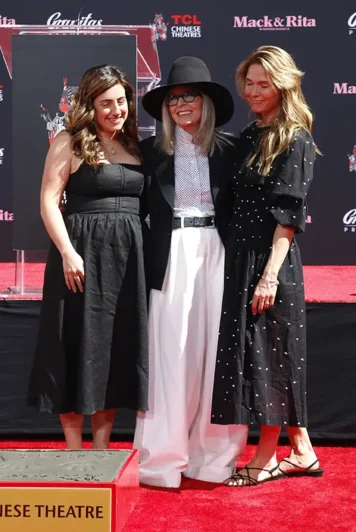
Off screen, she never married and didn’t seem to need to. She adopted two children in her fifties, continued writing, photographing, restoring homes, and living on her own terms. She was a woman who built a life defined not by others’ expectations, but by curiosity, creativity, and care.
A Legacy of Heart and Honor
Over her five-decade career, Diane Keaton received an Academy Award, a BAFTA Award, and two Golden Globe Awards, along with nominations for two Emmy Awards and a Tony Award. She was celebrated at the Film at Lincoln Center Gala Tribute in 2007 and received the AFI Life Achievement Award in 2017, cementing her place among Hollywood’s most enduring legends.
But more than any accolade, her real achievement was emotional honesty. She showed us that being a woman, in all our contradictions, anxieties, and joys, is something to be proud of.
Diane Keaton didn’t just act. She illuminated. She reminded us that softness is strength, that laughter is survival, and that life, in all its heartbreak and hilarity, is meant to be lived with open hands and an open heart.
Because she said so, and because she lived so, we will never forget her.

To cover different events and add a variety of expertise to the news and stories we report, we have several staff writers who contribute to our publication.