
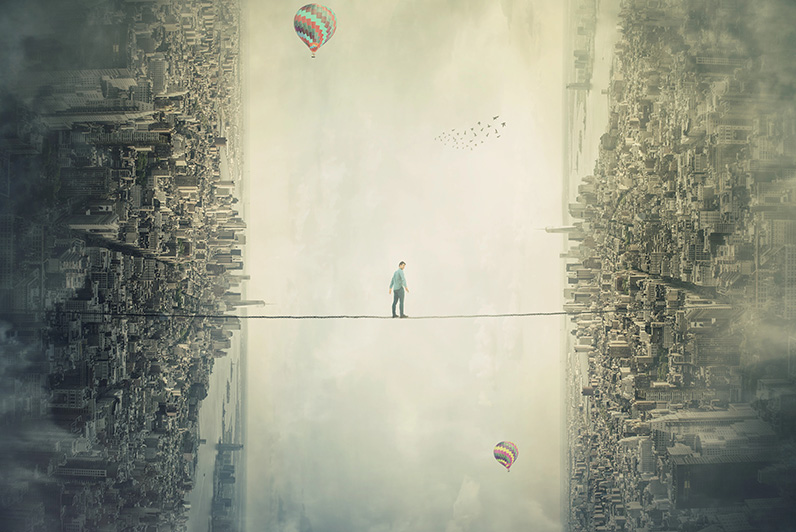
Have you ever felt like you watched yourself fail? You knew the answer, the right move, or exactly what to say, yet when the moment arrived, you froze. Your mind went blank, your heart pounded, and somehow the opportunity slipped away. This phenomenon is commonly known as choking under pressure. It is one of the most frustrating aspects of being human because failure often isn’t caused by a lack of intelligence, talent, or preparation. Instead, it is caused by hesitation. Often, the greatest obstacle between us and exceptional performance is fear itself.
What makes fear so powerful is that our brains are remarkably poor at distinguishing between real danger and imagined danger. Your nervous system cannot tell the difference between being chased by a bear and preparing to give a presentation at work. It doesn’t even recognize whether either event is happening or merely being vividly imagined. If your brain perceives a threat, your body reacts as though your survival depends on it. Your heart races, your breathing becomes shallow, your palms sweat, and your stomach tightens. These are not signs that something is wrong; they are signs that your body is preparing to protect you.
Thousands of years ago, this response was essential for survival. If our ancestors hesitated while escaping a predator, they died. Their nervous systems evolved to prioritize survival over comfort, logic, or peak performance. That same biological wiring remains inside each of us today. The problem is that modern life rarely requires us to outrun predators. Instead, we face deadlines, job interviews, difficult conversations, public speaking, athletic competitions, and exams. Although none of these situations threaten our lives, our brains often treat them as though they do.
In his TED Talk, adventurer Deri Llewellyn-Davies explains that there are two kinds of fear. The first is biological fear, the instinctive fear designed to protect us from genuine physical danger. Humans are born with only a few innate fears, such as loud noises and falling from great heights. Nearly every other fear we experience is learned over time.
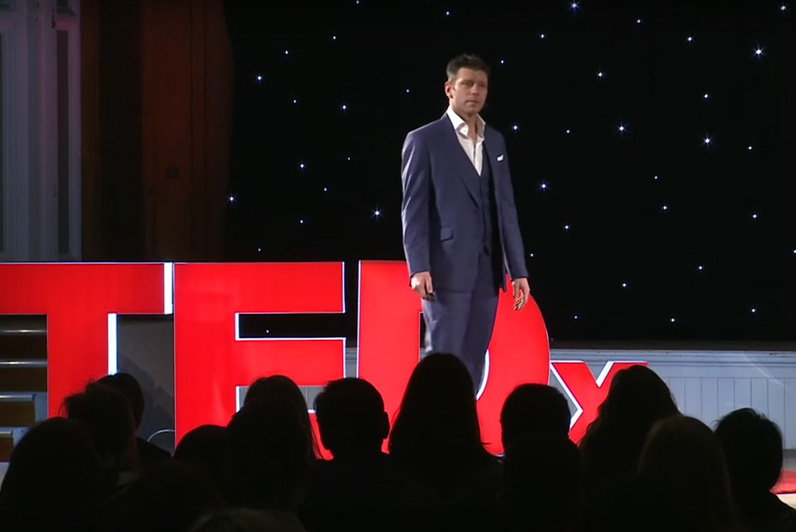
These learned fears include the fear of failure, rejection, embarrassment, criticism, and judgment. Unlike biological fear, these fears do not exist because our lives are in immediate danger. Instead, they originate from our ego, our sense of identity and our desire to be accepted by others. We fear looking foolish more than we fear remaining stagnant. We fear being judged more than we fear never discovering what we can become.
Ironically, these psychological fears often become far more restrictive than physical ones. A fear of rejection may stop someone from asking for a promotion. A fear of criticism may prevent an artist from sharing their work with the world. A fear of failure may keep an entrepreneur from ever starting a business. None of these outcomes protect us. They simply preserve our comfort while quietly limiting our potential.
This is what makes fear so deceptive. It disguises itself as wisdom.
It tells us, “Don’t speak up, you might sound stupid.”
“Don’t apply, you probably won’t get it.”
“Don’t try, you could fail.”
The voice of fear often sounds rational because it is trying to keep us safe. Unfortunately, it cannot distinguish between physical survival and emotional discomfort. To our nervous system, social rejection can trigger many of the same physiological responses as physical danger. Our bodies prepare for battle even when no battle exists.
This explains why courage is so often misunderstood. Courage is not the absence of fear. It is the decision to act despite fear. The people we admire most are not fearless individuals; they are people who refuse to let fear make their decisions.
Deri embodies this idea. He not only climbed Mount Everest but survived one of its deadliest avalanches, an event that claimed the lives of nineteen members of his expedition. Experiences like these remind us that courageous people are not immune to fear. If anything, they understand fear more intimately than most. The difference is that they recognize fear as information rather than instruction. Fear may warn them of risk, but it does not determine whether they move forward.
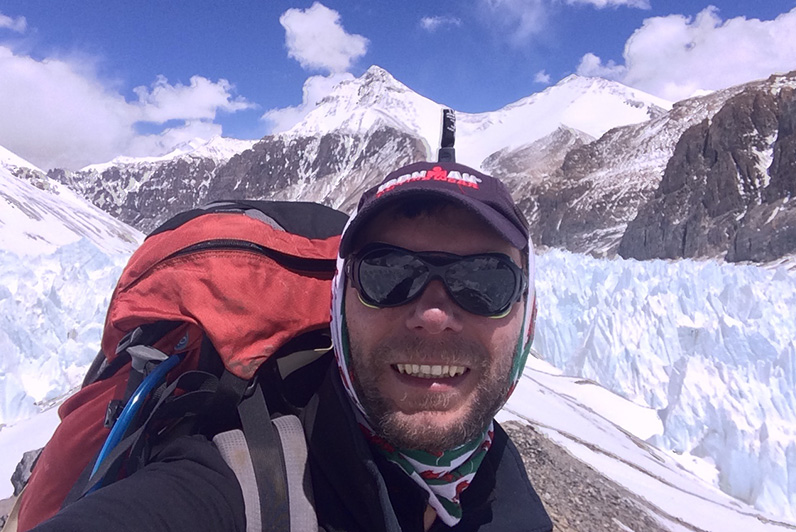
That distinction applies just as much to everyday life as it does to climb the highest mountain on Earth. Most of us will never face an avalanche, but we will face conversations that scare us, dreams that seem impossible, and opportunities that require vulnerability. We will have moments when every instinct tells us to retreat into what is familiar. Those moments define us far more than our moments of comfort ever will.
The tragedy is not that we experience fear. Fear is an unavoidable part of being human. The tragedy is allowing fear to convince us that we are incapable before we’ve even begun. Every meaningful achievement, earning a degree, building a career, falling in love, starting a business, raising a family, or pursuing a dream, requires stepping into uncertainty. Growth has never existed on the opposite side of comfort.
Perhaps Franklin D. Roosevelt was right when he said, “The only thing we have to fear is fear itself.” Not because fear is inherently evil, but because fear becomes dangerous when we allow it to dictate the course of our lives. The goal is not to eliminate fear; that would be impossible. The goal is to recognize fear for what it truly is: an ancient survival system trying to solve modern problems.
When we stop treating every uncomfortable moment as a life-or-death situation, fear loses much of its power. We begin speaking before we feel completely ready. We take opportunities despite uncertainty. We perform despite nervousness. We discover that confidence was never something we needed before acting. It was something that developed because we acted.
Fear will always whisper reasons to stay where we are. But everything we hope to become begins the moment we decide not to listen.
As Deri Llewellyn-Davies reminds us, fear doesn’t disappear. Growth begins the moment we stop waiting for fear to leave before we act.
Learn more: www.ultra-states.com

To cover different events and add a variety of expertise to the news and stories we report, we have several staff writers who contribute to our publication.