
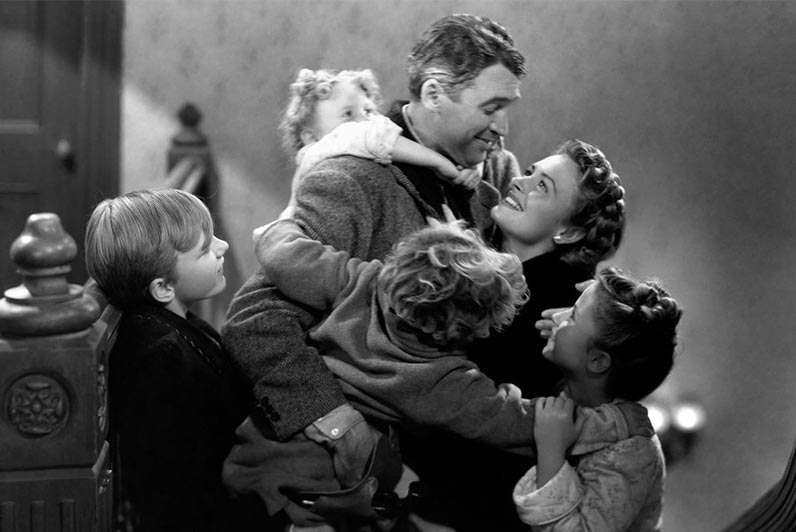
Christmas ends quietly. The decorations come down, the music fades, and life resumes. When It’s a Wonderful Life ends, we are left in that same pause: bells ringing, snow falling, George Bailey surrounded by love. But the story stops there. We never see what happens next. We never see who George becomes in the new year, after the miracle has passed and the ordinary days return. I have always wondered what a meaningful life looks like after the moment that proves it mattered.
George Bailey had big plans for his future. He was a dreamer who wanted to travel the world. That does not sound revolutionary as we sit in 2025, slowly approaching 2026. But in the 1940s, when there was no Google, no color photography, and no TripAdvisor, the idea was somewhere between adventurous and unhinged. Still, no matter how badly George wanted to “shake the dust off his shoes”, he did the responsible thing and deferred his dreams.
It was during this period of deferral, while running his father’s business, that George reunited with a childhood friend, Mary, played by Donna Reed. He fell in love, married her, and they had four children. They bought an old house that was falling apart on the outside, but inside it was warm and inviting. A home built more on intention than polish.
It makes me wonder how many times we are rerouted in our own lives, and how often we interpret those detours as either sacrifices for the greater good or tricks played by the universe. How often do we mistake redirection for failure?
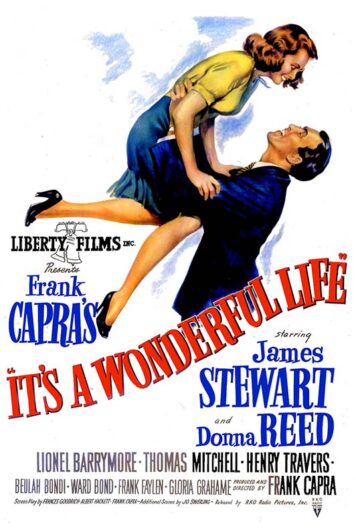 Jimmy Stewart was a perfect choice to play George Bailey. Offscreen, Stewart’s life mirrored far more of the film’s emotional weight than audiences realized at the time. He served in the military for 27 years, joining the Army Air Corps in 1941. He flew 20 combat missions in Europe as a B-24 bomber pilot and earned decorations including the Distinguished Flying Cross. He later retired from the Air Force Reserve as a Brigadier General in 1968, having also served tours related to the Vietnam War.
Stewart’s post World War II struggles with PTSD, then referred to as combat fatigue or shell shock, deeply informed his performance. His portrayal of George Bailey became therapeutic, allowing him to channel his real-life despair and eventual rediscovery of self-worth into the role. The film became a cathartic experience, not just for Stewart, but for countless returning soldiers seeking meaning after the war. The raw emotion, especially in the bridge scene where George breaks down, was not entirely scripted. It came from Stewart’s personal trauma, offering him release and forging a powerful connection with audiences, according to History and CNN.
Despite being nominated for five Academy Awards, including Stewart’s third Best Actor nomination, the film initially received mixed responses. Some critics felt it was too emotional, too sentimental. But what unsettled people was not sentimentality. It was vulnerability. The film dared to sit with despair. In black and white, with no distraction, you can see real tears stream down Stewart’s face. Nothing is hidden.
By the end of the film, George returns home to his family. Friends and neighbors gather around the Christmas tree, singing together as his house fills with warmth and noise. The miracle George receives is not freedom, nor escape from responsibility. It is clarity. A new insight. A renewed sense of purpose. He is no longer afraid of the money he owes or the drafty walls of his house. His life, imperfect as it is, has meaning.
I suspect many of us recognize ourselves in that return, changed but still standing in the life we built.
I like to believe George Bailey was changed after that Christmas. I imagine him traveling with his family one day, repairing the house in the summer, and never again doubting the value of the life he built.
As the days stretch on, the Christmas music stops, decorations are packed away, the dry tree is discarded, and tinsel lingers on the floor, I hope we allow ourselves to rest in the quiet. And I hope we are brave enough to ask the question George Bailey answered without realizing it:
What would it look like to stop waiting for proof that your life matters?

To cover different events and add a variety of expertise to the news and stories we report, we have several staff writers who contribute to our publication.