
As artificial intelligence continues to reshape the workforce, leaders face a challenge that extends beyond adopting new technology, they must also preserve the human connections that drive successful organizations.
In 2025, thousands of jobs have been impacted by automation and economic uncertainty. While businesses continue investing in innovation, many employees are grappling with job insecurity, financial stress, and declining trust in leadership. In an era increasingly defined by technology, Kelley Gurley believes the greatest competitive advantage isn’t artificial intelligence—it’s human leadership.
After more than 25 years developing technology solutions, Gurley says her success has never been about the technology itself. “I didn’t fall in love with technology. I fell in love with people.” Throughout her career, she has viewed every decision through a simple question: How can this improve someone else’s life? “Every move I made was a doorway for someone else’s life to get better,” she says. Rather than focusing solely on growth and innovation, Gurley believes great leaders create environments where employees feel valued, trusted, and empowered. Here are four leadership lessons that have guided her career.
Hire for Character, Not Potential
It’s easy to become attached to who someone could become instead of honestly evaluating who they are today. British explorer Sir Ranulph Fiennes once advised, “Whenever feasible, pick your team on character, not skill.” Gurley believes the same principle applies in business. One of the hardest lessons she learned as a leader was realizing she couldn’t want someone’s success more than they wanted it for themselves. When leaders invest solely in untapped potential without evidence of commitment, they’re often betting on possibility instead of behavior. But when employees demonstrate curiosity, initiative, and a willingness to learn, missing skills can usually be taught.
Sometimes an employee doesn’t need to be replaced, they simply need training, coaching, or an honest conversation.
Don’t Avoid Difficult Conversations
Few people enjoy unnecessary meetings, but meaningful conversations remain one of the most valuable tools a leader has. According to Gurley, people don’t necessarily resist change, they resist feeling excluded from it. When communication breaks down, uncertainty quickly fills the gaps. Employees begin to feel disconnected from decisions that directly affect them, eroding trust and engagement. Research supports that concern. HR World reports that 61% of employees have considered leaving a job because of poor communication, with more than one in four identifying it as the primary reason.
For Gurley, transparency isn’t simply good management, it’s an investment in trust.
Before making major decisions, she encourages leaders to involve employees whenever possible. Those conversations don’t waste time; they build confidence, strengthen relationships, and create greater alignment throughout an organization.
Trust Is Built Before It’s Needed
Companies like Microsoft and Google regularly incorporate trust-building exercises into their teams because they understand that trust directly influences performance.
A large meta-analysis examining 112 independent studies found that teams with greater trust in their leaders consistently performed better. Trust encouraged collaboration, increased commitment, and made people more willing to work toward shared goals.
Gurley believes trust is strengthened through consistent communication, especially during times of uncertainty.
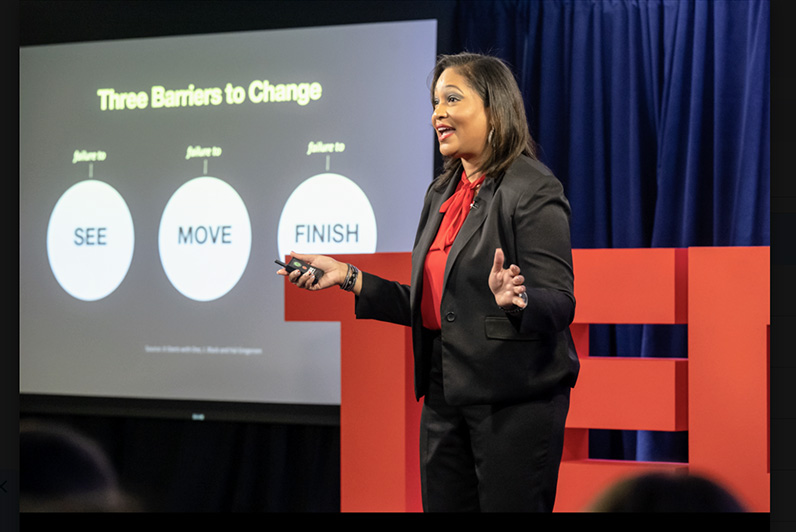
In her TED Talk, she identifies three common challenges people face during change: failing to see the change, struggling to move through it, and failing to recognize when they’ve successfully reached the other side. Leaders who acknowledge those challenges instead of ignoring them help employees navigate uncertainty with greater confidence.
Remember That Businesses Are Built by People
Technology can improve efficiency, but it cannot replace empathy, trust, or genuine human connection. As organizations continue adapting to rapid change, Gurley believes leaders must prioritize more than quarterly growth. They must invest in the people responsible for achieving it.
Strong leaders accomplish impressive things themselves. Great leaders inspire others to accomplish impressive things, too. Former President Ronald Reagan once said, “A great leader gets people to do great things.” Gurley’s philosophy expands on that idea. Exceptional leaders don’t use people to build their own success. Instead, they create environments where others can discover and develop their own. The most successful organizations wont simply embrace innovation; they’ll continue investing in the people who make innovation possible.
Learn more: https://isolifecoaching.com/

To cover different events and add a variety of expertise to the news and stories we report, we have several staff writers who contribute to our publication.