

What do you do when uncertainty isn’t a headline on the evening news, but a reality sitting across your own kitchen table? At a time when the world feels increasingly unstable, economically, politically, and socially, that question is no longer abstract. It is personal. For Paul Finck, it became undeniable the day his wife of 25 years was diagnosed with stage-four cancer.
Doctors warned the future could be measured in weeks. At the time, Finck and his wife, Deborah, were preparing to become empty nesters. After raising six children, three sets of twins, into happy, healthy, contributing members of society, they were stepping into a new chapter. One defined by freedom, reflection, and the reward of a life intentionally built. Then everything shifted.
The future, once expansive, suddenly felt fragile. In that moment, they made a quiet decision that would shape everything that followed. “No regrets.” They had already spent decades living with intention, raising their children, creating memories, and being fully present in their lives. Whatever uncertainty lay ahead, they would continue living that way. That decision became more than a personal commitment. It became the lens through which Finck approaches business, family, and the unpredictable nature of life itself.
Today, Finck is widely known as the “Maverick Millionaire”, an entrepreneur and strategist who has spent decades helping people across backgrounds, ages, and circumstances build wealth and create opportunity. But the title is not about him. It reflects what he believes is possible for others.
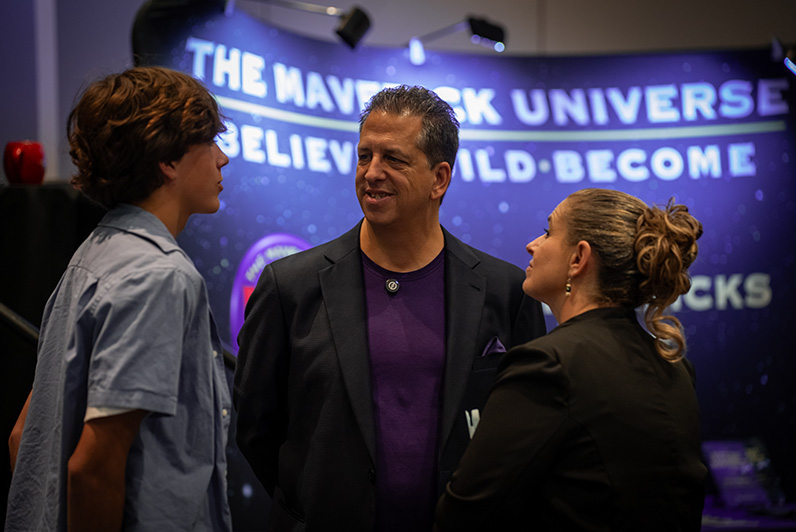
The Maverick Millionaire
For more than forty years, Finck has built businesses from the ground up, navigated economic downturns, and learned firsthand that opportunity often hides inside uncertainty. His approach stands apart. Where many advisors focus on either financial strategy or mindset, Finck integrates both.
With training in psychology and certifications in neurolinguistic programming and hypnotherapy, he combines how people think with how businesses actually function. He calls it applied business psychology. A framework not just for motivation, but for execution. Over the years, that approach has helped thousands of individuals, single parents, young entrepreneurs, and seasoned professionals transform not only their finances but the trajectory of their lives.
“People hear the word millionaire and think it’s reserved for a certain kind of person,” Finck says. “It’s not. I’ve watched people from every background create success once they understand the principles and apply them.” What drives him is not the money. It is the shift. “Seeing someone realize what’s possible for them changes everything,” he says. “It changes their life. It changes their family’s life.”
A Household of Eight
Much of Finck’s philosophy was forged at home. Raising three sets of twins while traveling the world and speaking to thousands required discipline, structure, and leadership at a level few ever experience. “I was the sole income producer for a family of eight,” he says. For many, that level of responsibility would feel overwhelming.
For Finck, it became fuel. One principle guided the household: You are either adding to society or taking away from it. The contribution started at home. Each child carried responsibility. Each learned that participation creates opportunity.
All six eventually worked, earning their own income and developing a work ethic grounded in effort, not entitlement. Today, Finck measures success as a parent simply: “My children grew up to be contributing members of society.” For him, that outcome outweighs any business achievement.
Living Without Regrets
The true test of Finck’s philosophy came during the five years his wife battled cancer. It was long. It was painful. It was deeply personal. And yet, the decision they made at the beginning remained constant.
No regrets. They had lived fully. There was little left unsaid. Little left undone. That perspective reshaped how Finck understands grief. “Most people struggle because they’re stuck in ‘would have, could have, should have,’” he says. But when life is lived fully in real time, regret loses its grip. Honoring his wife meant continuing forward with the same intention. “I decided to keep living,” he says. “Not just for myself, but for her as well.”
The Myth of Stress
In a world defined by rising anxiety, Finck challenges a deeply held belief. “Stress is a chosen emotion,” he says. It is a provocative statement, but his point is practical. Stress is not a successful strategy. “When people stress out, they’re like someone running around screaming ‘fire’ instead of putting it out,” he says.
High emotion often limits clear thinking. Instead, he focuses on control. “You’re only in control of three things: your thoughts, your words, and your actions.” Everything else exists outside that sphere. Trying to control what you cannot leads to frustration. Focusing on what you can control creates progress.
Opportunity in Uncertain Times
Finck does not see uncertainty as a threat. He sees it as a signal. Historically, some of the greatest opportunities emerge during disruption. When markets shift, most people hesitate.
Others move. “If everything’s getting more expensive,” he says, “someone is collecting that money. Be the one who collects it.” That mindset is central to what he teaches. “Success leaves clues. Find the people who are succeeding and learn from them.”
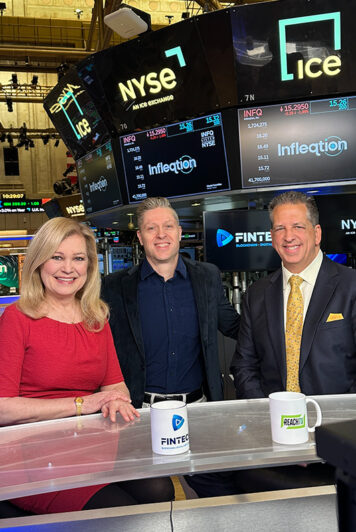
One Life, Lived Fully
Despite the title “Maverick Millionaire,” Finck is clear about what matters. “It’s not about the dollars or the zeros.” Money fluctuates. Life does not wait. “My lifestyle is built on joy, passion, happiness, and abundance.” It all returns to a simple truth. We get one life. Waiting for certainty guarantees regret. “Control what you can control,” he says. “Let everything else go.” In an unpredictable world, that may be the most grounded strategy available. Because uncertainty is constant, but how we choose to live within it is not.
To learn more about Paul Finck, visit PaulFinck.com.
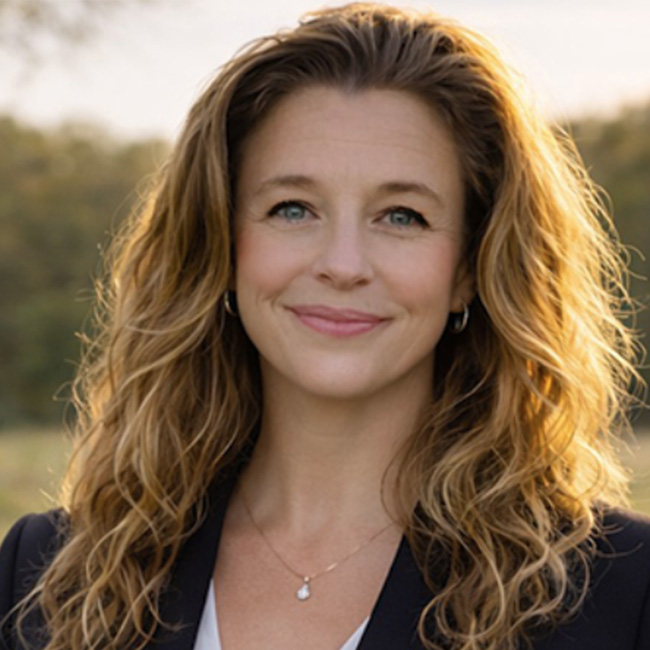
Dr. Collette Wayne is the founder of Oceans of Grace and a strategist and ecosystem wellness scientist who optimizes leaders and organizations for resilience, peak performance, and maximum capacity.